

The Gas and the Brake: How Yoga + Hands-on Assists Help Regulate the Autonomic Nervous System
Updated: Mar 19
In the last post, we met neuroception — the nervous system's continuous, below-conscious scan for safety. We explored why consent and agency aren't just ethical considerations but neurological ones, and why the Rubber Band Method® is built from the ground up on creating safety before a single assist is offered.
Now let's go one layer deeper.
Once the nervous system has registered safe, what actually happens next? What is the machinery that shifts the body from guarded to receptive, from contracted to available, from stressed to genuinely at ease?
The answer lives in two branches of your autonomic nervous system — and understanding them will change how you think about everything that happens in a yoga room.
Meet Your Autonomic Nervous System
Your autonomic nervous system helps regulate many functions that run without conscious effort — including heart rate, breathing, digestion, immune signaling, and aspects of hormonal activity. It is one of the body’s central regulatory systems, operating through two branches that work in continuous, dynamic relationship with each other.
The sympathetic branch is your accelerator. It mobilizes energy, sharpens focus, elevates heart rate, and prepares the body to meet a challenge. This is the branch that gets you through a demanding vinyasa sequence, responds to a deadline, or gets you out of the way of an oncoming car. It is not your enemy. It is essential.
The parasympathetic branch is your brake. It slows the heart, supports slower, deeper breathing, resumes digestion, lowers blood pressure, and signals broadly across the body that it is safe to rest, repair, and restore. This is the branch that allows savasana to actually work — not just as a rest between poses, but as a genuine physiological shift into recovery.
You need both. Always. The goal is never to eliminate the sympathetic response — it's to have a nervous system that can move fluidly between the two, accelerating when needed and easing back down when the moment has passed.
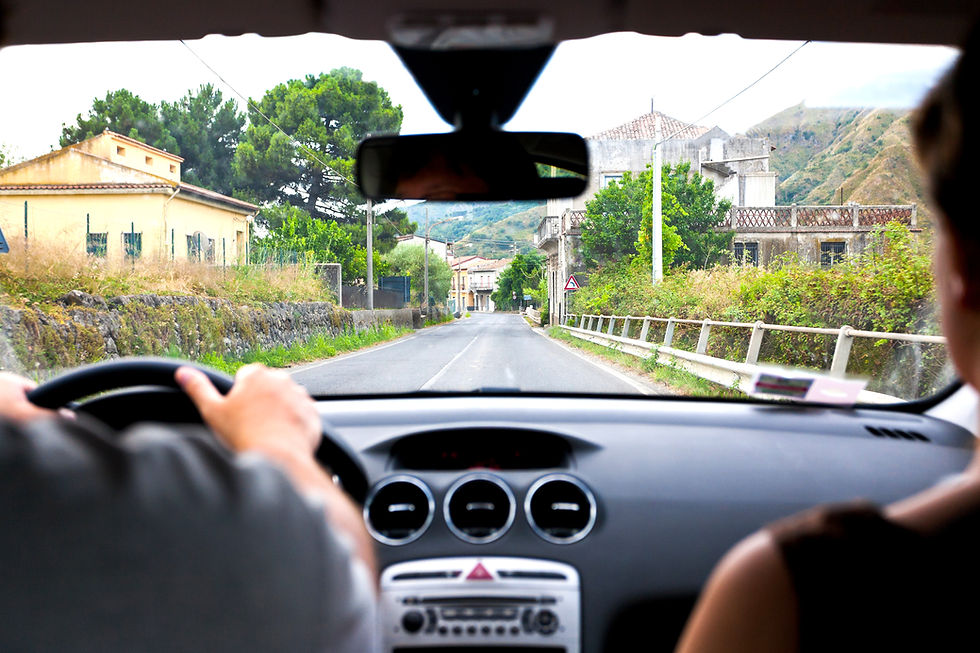
Think of it exactly like driving a car. To arrive safely at any destination, you need both the gas pedal and the brake. You need the gas to get moving, to navigate, to respond. You need the brake to slow down, to pause, to stop when stopping is right. A car with only a gas pedal is dangerous. A car with only a brake goes nowhere. The skill is in how fluidly, how responsively, you move between the two.
Your nervous system works the same way.
The Problem With the Gas Pedal Stuck Down
Here is where it gets important for your students — and honestly, for you too.
Modern life often pushes the sympathetic branch toward chronic over-activation. Chronic stress, overstimulation, poor sleep, the relentlessness of screens and noise and demand — all of it keeps the accelerator pressed. And here is the critical thing about the nervous system: it responds to repeated patterns of activation, much like a muscle responds to repeated use.
The more frequently a branch is activated, the stronger and more readily available it becomes. it becomes the dominant baseline pattern. The nervous system learns, in effect, to stay in acceleration even when there is nothing to accelerate toward.
And when that happens, the parasympathetic branch — the brake — loses its tone. It becomes less responsive, less able to counteract the sympathetic surge. The body struggles to come down from a stress response even when the stressor is long gone. Sleep can become disrupted, digestion can falter, muscles may become chronically braced,mood can destabilize, and inflammatory markers often rise.
This is not a character flaw or a failure of willpower. It is a trained physiological pattern. And like any trained pattern, it can be retrained.
Heart Rate Variability: Reading the Balance
There is a beautifully precise way to measure how well these two branches are working together, and it lives in your heartbeat.
Heart rate variability (HRV) is the natural, moment-to-moment fluctuation in time between heartbeats. It sounds counterintuitive — shouldn’t a healthy heart beat like a metronome? — but in fact the opposite is true. A heart that beats with slight, continuous variation is a heart being dynamically regulated by the nervous system.
One of the clearest places we can see this regulation is in the relationship between breathing and heart rate. As you inhale, vagal influence on the heart momentarily decreases and heart rate naturally rises. As you exhale, vagal influence increases and heart rate slows. This natural rhythm — called respiratory sinus arrhythmia — reflects the close relationship between breathing and parasympathetic regulation.
This continuous variation in the time between beats is what HRV measures. Higher HRV is generally associated with a nervous system that is adaptable and responsive, able to shift fluidly between activation and recovery.
Low HRV — a heart beating with very little variation — often reflects reduced autonomic flexibility and can be associated with chronic stress or sympathetic dominance. The brake isn't effectively countering the gas. The two branches are not in healthy dialogue.
HRV is now widely used in research and clinical settings as a marker of cardiovascular health, stress resilience, and autonomic nervous system function. Elite athletes monitor it. Researchers use it to measure the effects of stress reduction interventions. And yoga practices such as breathwork, movement, and meditation have been shown in many studies to improve HRV.
Your yoga class can function as an HRV training environment. Every time a student's nervous system shifts toward parasympathetic activation on their mat, they are training their brake to work better.
Tone: You Can Train the Brake
This is perhaps the most hopeful thing in this entire series, so let it land:
The parasympathetic branch can be strengthened. Its tone can be rebuilt. The brake can be trained to respond more readily, more powerfully, more efficiently — through regular, intentional activation.
Every pranayama practice that lengthens the exhale. Every meditation that cultivates stillness. Every savasana that is genuinely surrendered rather than endured. Every assist that communicates safety to the nervous system rather than activating its defenses. All of it signals the parasympathetic branch. All of it is training the brake.
This reframes what yoga actually is. Not just flexibility training, not just stress relief in the vague sense, but a practice that research increasingly shows can influence autonomic regulation — of training the body's two branches back into responsive, fluid balance.
And it reframes what a skilled yoga assist does. When a student receives touch that is consensual, warm, unhurried, and follows the action lines of their body rather than overriding them, their nervous system doesn’t just relax in that moment. It experiences what parasympathetic settling feels like. With repetition, that experience can make it easier for the nervous system to find that state again — on and off the mat.
That is not a small thing. That is the work.
What This Means in Your Room: Yoga + Assists
Every student who walks through your door has a nervous system with a particular balance — or imbalance — between these two branches. Some arrive already relatively regulated. Many arrive with the gas pedal significantly pressed, carrying the accumulated stress of their day, their week, their life.
Your class is an opportunity for their nervous system to practice something it may rarely get to practice: genuine, safe, supported deceleration.
The RBM methodology for yoga assists is designed to facilitate exactly this — from the consent process that establishes safety before class begins, to the quality of pressure that follows the body's own action lines, to the slow application and withdrawal of contact that never startles or destabilizes. Each of these elements is a signal to the parasympathetic branch: it's safe to engage. You can ease the gas. The brake is welcome here.
Next: The Vagus Nerve — meet the remarkable neural pathway that connects your brain to your body, governs your sense of safety, and explains why a single warm, grounded touch can meaningfully shift a student's physiological state.


Comments